- September 02nd, 2026
- Categories: Uncategorized
About to move? Planning renovations? Want to declutter? Whatever the situation, hiring a skip bin is a great way to get rid of anything you no longer need. However, it’s not as simple as putting everything straight into the skip without a second thought.
In this article, we’ve compiled a simple guide to what you can and can’t you put in the skip bin. Let’s get started!
What Can Go In
Skip bins are a great way to dispose of most of the items you have at home. If you’re based in Melbourne, these are the items that will generally be accepted.
Household Items
Old household odds and ends are generally fine for a skip bin, including broken appliances, kitchenware, small household goods and general rubbish. If you’re clearing out a garage, spare room or entire house, most of the everyday junk you no longer want can go in.
The main exception is anything hazardous or something that requires specialist disposal. Paint, chemicals, batteries and certain electrical items may have separate disposal requirements, so it’s best not to assume that every household item belongs in the skip.
Garden Waste
Clearing out the backyard? Grass clippings, leaves, weeds, smaller branches and other general garden waste can all usually go into a skip bin. In most cases, it’s a practical way to deal with the pile left behind after pruning, mowing or a serious garden tidy-up.
Keep an eye on what comes with the greenery, though. Soil, rocks, concrete and other heavy materials generally need to be kept separate, particularly if you’re using a standard general-waste skip.
Clothes
Unwanted clothing can generally be placed in a skip bin, particularly if it is stained, damaged or too worn to be reused. Old bedding and other fabric items may also be accepted as general household waste.
Before throwing everything away, have a quick look through the pile. Clothes or shoes that are still clean and wearable could be donated, sold, recycled or given to people you know rather than heading straight to the landfill.
Furniture
Getting rid of an old couch, table, cupboard or shelving unit? Furniture is generally accepted in skip bins, making them useful when clearing out a home or replacing bulky household items.
Large pieces may need to be dismantled first, particularly if you’re using a smaller bin. Breaking furniture down also leaves more room for other rubbish and makes it easier to load everything safely.
Certain items could also be left out for hard rubbish collection or donated to your local op shop.
Books and Toys
Old books, unwanted toys and similar household clutter can generally go into a skip bin. This can be particularly useful when clearing out a child’s bedroom, moving house or finally tackling those boxes that have been sitting in storage for years.
There’s a simple question worth asking before they hit the skip: is someone else likely to use this? Books and toys in decent condition can often be donated, while damaged or unusable items can go into the bin.
Timber
Timber from old furniture, general household projects and many renovation jobs can usually go into a skip bin. Offcuts, broken boards and unwanted wooden items are common inclusions when clearing out a property.
Some timber does need more consideration, particularly treated, painted or contaminated wood. If you have a large amount or aren’t sure what type it is, check with the skip provider before loading it.
What Can’t Go In
Glass
Glass isn’t something you should automatically throw into a general skip bin. Broken pieces can create a safety hazard for anyone handling the waste, while certain types of glass may need to be processed separately.
That includes things such as windows, mirrors and large sheets of glass. Disposal rules can vary between providers, so check first rather than discovering halfway through the clean-up that you’ve got a pile of glass with nowhere to put it.
Bricks
A pile of old bricks might seem like an obvious candidate for a skip, but their weight is the problem. Bricks can quickly make a general-waste bin excessively heavy, which is why they are often handled separately as construction or clean-fill waste.
If you’re pulling down a brick wall or clearing out a renovation site, mention the bricks when arranging your bin. You may need a specific bin suited to heavy building materials rather than a standard general-waste option.
Dirt
Soil and dirt can become surprisingly heavy once you start filling a skip. Standard general-waste bins aren’t necessarily designed to handle large quantities, so dirt is commonly restricted or requires a dedicated clean-fill arrangement.
A small amount mixed in with garden waste may be treated differently depending on the provider, but don’t fill a standard skip with excavated soil without checking first. The wrong material can create weight and disposal issues.
Concrete
Concrete is another material where weight quickly becomes the sticking point. A few chunks from a small job are very different from a pile left behind after demolishing a slab, driveway or path.
Large amounts generally belong in a dedicated construction, concrete or clean-fill waste stream. Using the appropriate bin helps avoid exceeding weight limits and makes the material easier to process after collection.
Sand
Sand might look harmless sitting in a pile, but there’s a serious amount of weight packed into even a relatively small quantity. For that reason, it is often restricted from standard mixed-waste skip bins.
If you’re removing sand from landscaping, paving or another project, let the provider know what you’re disposing of. A suitable heavy-material or clean-fill option may be required instead.
Tiles
A bathroom renovation can leave you with a surprisingly heavy pile of broken tiles. While they might seem like ordinary rubbish, tiles are generally treated as construction waste and may not belong in a standard general-waste skip.
Small quantities may be handled differently depending on the provider, but large amounts should be discussed when booking. The same applies to the mortar, rubble and other heavy material left behind during a renovation.
Plaster
Old plasterboard and plaster waste can require separate handling rather than going straight into a general skip. Disposal requirements can vary depending on the type of plaster and how much you’re throwing away.
Renovating a room can produce far more plaster waste than expected, particularly once walls and ceilings start coming down. Check with the provider before loading it so you know which bin or disposal stream is appropriate.
Additional Charge Items
Mattresses
Mattresses can usually be placed in a skip bin, but they often attract an additional disposal fee. Their combination of foam, fabric, springs and other materials means they are handled differently from ordinary household rubbish.
They can also take up a fair chunk of your available bin space. If you’re clearing out several bedrooms, mention the mattresses when booking so the provider can explain the applicable charges and disposal arrangements.
Gas Bottles
Gas bottles need extra care because they may contain residual gas even when they appear to be empty. For safety reasons, they should never simply be tossed into a skip without checking that the provider accepts them.
Additional charges may apply because gas bottles require specialist handling and processing. Tell the skip company about them when booking rather than hiding one underneath other rubbish.
Car Tyres
Old car tyres are commonly accepted for an additional charge rather than being treated like ordinary household waste. They are bulky, difficult to process with general rubbish and require a separate recycling or disposal process.
If you’re replacing several tyres or clearing out a garage, count them before booking the skip. Letting the provider know upfront avoids surprises when the bin is collected and allows the correct disposal fee to be applied.
Skip Bins for Hire in Melbourne
Now that you know what can and can’t go in, the next step is to hire the skip bin itself.
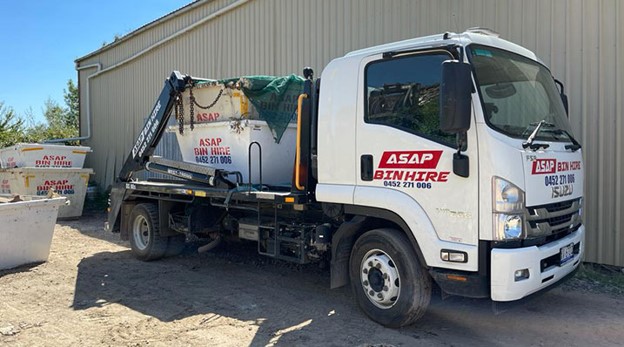
Operating since 2017, ASAP Bin Hire is Melbourne’s premier provider of mini skip bins, and rubbish bin hire services. Serving the eastern and south-eastern suburbs, we’ve built a solid reputation for a service that’s timely, efficient, and customer-focused.
We have a great range of versatile mini skip bins available. This includes options at 2, 3, 4, 6, 8, & 10 m3. Please also check out your options for commercial waste, clean fill, and additional waste items.
Not sure where to start? We’re always here to make the process as stress-free as possible, so be sure to contact us with any queries!
FAQs
What type of skip bin should I go for?
The type of skip bin you select depends on the type and quantity of waste you have. You’re always welcome to call our dedicated helpline and get advice on how to find the perfect skip bin for the job. For general understanding, waste can be bifurcated as:
- Hazardous and Non Hazardous
- General Waste
- Green Waste
- Soil and dirt
- Commercial waste
- Metallic waste
How much will it cost to hire a skip bin?
The cost depends on the type of skip you choose. For more details, check our online listings or contact us and get the exact quote.
What if I want to keep the bin for a longer period?
You can keep the bin for a longer period of time. However, extra charges will apply so be sure to account for that if an extension is required.